One Gift, Given Well: What Japan's Culture of Thoughtful Giving Can Teach Us About the Holidays

Let's be honest about what the holidays actually look like for most of us. There's a list. The list grows. You end up panic-buying a scented candle for your coworker and a $30 Amazon gadget for your uncle because you forgot he existed until December 20th. By the time January rolls around, you're staring at a credit card statement and a vague sense of guilt — not because you were ungrateful, but because none of it felt quite right.
Japan has a different relationship with giving. And once you understand it, it's genuinely hard to go back to the old way.
Gifting as a Practice, Not a Transaction
In Japanese culture, gift-giving isn't a seasonal obligation — it's woven into everyday life. There are two major gift-giving seasons: ochugen in midsummer and oseibo in December. But gifts also appear at homecomings, after trips, at life milestones, and sometimes for no reason at all except that someone thought of you.
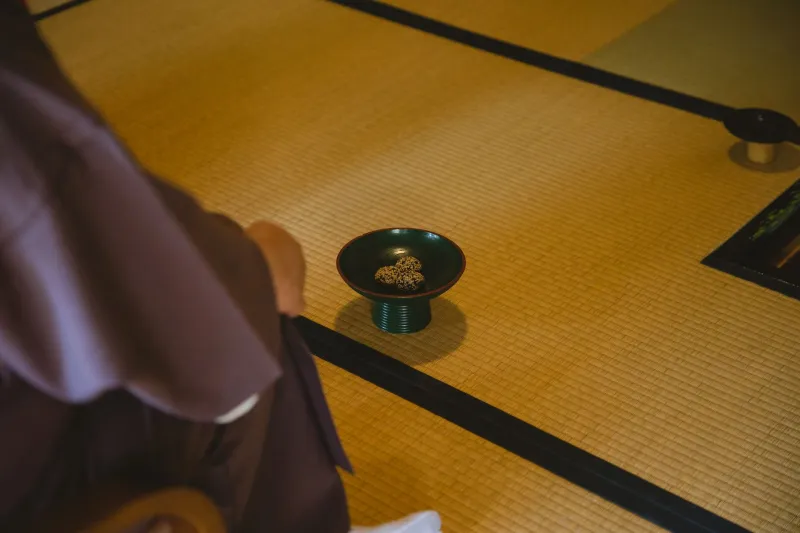
What makes this different from the American version isn't frequency — it's intention. In Japan, the act of giving is treated almost like a small ceremony. The gift itself matters less than what surrounds it: the selection process, the wrapping, the presentation, and the timing. A single piece of high-quality wagashi (traditional Japanese confection) wrapped in washi paper and tied with a silk cord can carry more emotional weight than a gift basket stuffed with random goodies.
The message isn't look how much I spent. It's I thought about you specifically.
The Philosophy Behind the Wrap
If you've ever received a gift from Japan — or visited a Japanese department store — you know that the wrapping is almost as impressive as the gift itself. This isn't vanity. The care taken in presentation reflects a concept deeply embedded in Japanese aesthetics: that how you do something is as meaningful as what you do.
Traditional Japanese wrapping — tsutsumi — is an art form with roots going back centuries. Fabrics like furoshiki (a square wrapping cloth) are folded precisely around objects, creating something beautiful before the gift is even opened. Some wrapping styles are specific to occasions: there are different folds for weddings versus condolences, for example.
The lesson here isn't that you need to learn origami-style gift wrapping (though honestly, it's worth trying). It's that slowing down long enough to wrap something with care sends a signal that the person receiving it was worth your time and attention. In a world of gift bags stuffed with tissue paper, that signal lands.
Restraint as Respect
One of the more counterintuitive aspects of Japanese gift culture is the value placed on restraint. Giving an extravagant gift can actually cause discomfort — it creates an imbalance, puts pressure on the recipient to reciprocate at the same level, and can feel like showing off rather than connecting.
There's a social awareness baked into Japanese gifting: you're not just thinking about what you want to give, but about how the other person will feel receiving it. This is a form of empathy that doesn't get talked about enough in the context of generosity.
In the US, we tend to conflate generosity with abundance. More gifts, bigger gifts, more expensive gifts — surely that means you care more, right? But if the person across from you feels overwhelmed, obligated, or quietly embarrassed, the gift has missed its mark no matter how much it cost.
Restraint, in this context, isn't stinginess. It's a kind of social fluency.
The One Perfect Thing
Here's the practical shift that Japanese gift culture invites: instead of buying five okay things for someone, what if you bought one great thing?
This requires actually knowing the person. What do they love? What would genuinely make their week better? What's something they'd never buy for themselves but would absolutely use? This kind of thinking takes more time than scrolling through a "gifts under $50" listicle — but it produces something the listicle never will: a gift that feels personal.
Japanese omiyage (souvenir gifts brought back from travel) operate on this principle beautifully. When someone returns from a trip in Japan, they bring back regional specialties — a particular snack, a local craft, something you can only get from that specific place. The gift says: I was there, I thought of you, and I brought back a piece of it. That story is worth more than the item itself.
You don't have to travel internationally to apply this. Next time you're in a city you don't usually visit, or you stumble across a small maker whose work genuinely moves you, pick something up for someone specific. The specificity is the whole point.
Letting Go of Gift Guilt
One unexpected benefit of adopting a more intentional, minimal approach to gifting? The guilt starts to lift.
American consumer culture has done a number on how we feel about gift-giving. We feel guilty if we don't spend enough, guilty if we spend too much, guilty if the gift isn't well-received, guilty if we forgot someone entirely. It's a lot.
When you shift your focus from quantity and cost to thoughtfulness and meaning, the emotional math changes. A smaller gift chosen carefully doesn't feel like a shortcut — it feels like a statement. And when you stop buying things just to fill a list, you stop accumulating that low-level shame that comes with spending money on stuff that doesn't matter.
There's a kind of freedom in giving less, better.
A Few Ways to Start
You don't need to overhaul your entire approach to gift-giving overnight. But here are a few small shifts worth trying:
- Pause before the list. Before you start shopping, think about each person individually. What do they actually need or love right now?
- Invest in the wrap. A simple linen ribbon, a piece of handmade paper, or even a reusable cloth bag elevates even a modest gift.
- Skip the filler. If you're padding a gift with extras just to make it feel like more, cut the extras. The main gift is enough.
- Bring back something local. If you travel — even a road trip to a neighboring state — pick up one regional specialty for someone who would appreciate it.
- Give experiences or consumables. A beautiful tea, a local honey, a coffee from a roaster you love — things that get used and enjoyed leave no clutter behind.
The Deeper Point
At its core, the Japanese approach to gift-giving is about presence — not presents. It's about pausing long enough to actually think about another person, then expressing that thought in a form they can hold.
In a culture that moves fast and defaults to convenience, that pause is quietly radical. And the people on the receiving end? They feel the difference. Maybe not consciously, but they do.
One gift, given well. That's the whole idea.