Why Doing Absolutely Nothing Might Be the Most Productive Thing You Do All Day
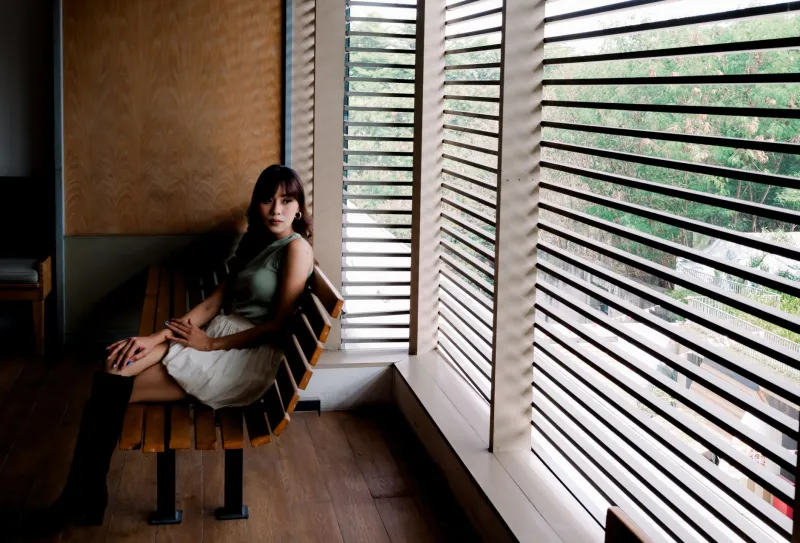
Let's be honest. The last time you sat somewhere without your phone, without a podcast playing, without mentally rehearsing your to-do list — when was that? For most Americans, genuine, guilt-free idleness feels almost illegal. We've been conditioned to treat every spare moment as a resource to be optimized, a gap to be filled, a problem to be solved. Even our vacations come with itineraries.
Japan, a country often celebrated for its extraordinary work ethic and precision, might seem like the last place you'd look for permission to do nothing. But tucked inside Japanese cultural tradition is a concept called borenji — a practice of allowing the mind to drift freely, without agenda or outcome, as a form of genuine mental restoration. And in a world where burnout has become practically a personality trait, it might be exactly what we need.
What Borenji Actually Means
Borenji doesn't translate cleanly into English, which is part of why it tends to get lost in conversations about Japanese wellness culture. It's not meditation — there's no technique, no breathing exercise, no app to guide you through it. It's not napping, and it's not "lazy." The closest approximation might be something like purposeful mind-wandering: the deliberate act of stepping back from directed thought and letting your consciousness do whatever it wants, completely unsupervised.
Think of it as the mental equivalent of leaving a field fallow. Farmers have always known that soil needs unplanted seasons to recover its richness. Borenji works on a similar logic — the mind, when released from constant demands, quietly replenishes something that no amount of sleep or structured relaxation can fully restore.
In Japan, this kind of unhurried mental space has historically been woven into everyday life in subtle ways: sitting by a window and watching rain without reaching for your phone, taking a slow walk with no destination in mind, or simply staring at a garden without trying to appreciate it in any deliberate way. It's not a scheduled wellness ritual. It's more like a cultural permission slip.
Why Americans Are So Bad at This
The United States has a complicated relationship with idleness. From a very young age, we absorb the message that busyness equals worth. Packed schedules signal ambition. Downtime needs to be justified — and ideally, it should be improving you in some measurable way. Even our leisure has been gamified. You're not just watching a show; you're "unwinding." You're not just walking; you're hitting your step count.
This relentless optimization culture has a real cost. Research from the American Psychological Association has consistently linked chronic busyness and the inability to mentally disengage with higher rates of anxiety, decision fatigue, and creative stagnation. Your brain, it turns out, does some of its most important work precisely when you stop directing it.
Neuroscientists call this the default mode network — the brain circuitry that activates during rest and unfocused thought. Far from going offline when you zone out, this network is busy consolidating memories, generating novel connections between ideas, and processing emotional experiences. In other words, your brain is quietly solving problems you didn't even know you were carrying — but only if you give it the unstructured time to do so.
Borenji, in a sense, is the cultural practice built around trusting that process.
The Creativity Connection
Some of the most celebrated creative breakthroughs in history happened not at a desk, but in the shower, on a walk, or staring out a train window. There's a reason for that. When you stop trying to think, your mind starts making unexpected lateral connections — the kind that don't emerge under pressure or deadline.
In Japan, many artists, writers, and craftspeople have spoken about the role of empty time in their creative process. It's not procrastination. It's incubation. The idea isn't that you sit around waiting for inspiration to strike — it's that you create the internal conditions where inspiration actually can.
For Americans used to productivity systems and creative sprints, this might feel counterintuitive to the point of frustrating. But consider: how many of your best ideas came to you mid-meeting versus mid-shower? Borenji is just the intentional version of that shower.
How to Actually Practice Borenji (Without Feeling Like You're Wasting Time)
The biggest obstacle to borenji for most Western readers isn't time — it's guilt. So before anything else, it helps to reframe the practice not as "doing nothing" but as active mental recovery. You're not slacking. You're maintaining a resource.
Here are a few low-friction ways to bring borenji into your daily life:
Start with five minutes. Set a timer, put your phone face-down, and simply sit. Don't try to meditate. Don't try to think about anything in particular. If thoughts come, let them drift through without grabbing onto them. This is harder than it sounds, and that's okay.
Take a purposeless walk. Leave the earbuds at home. Pick a direction and wander. No podcast, no phone call, no step goal. Just your feet and whatever catches your eye. Notice how long it takes before the urge to do something with the time starts to fade.
Let yourself be bored in line. Next time you're waiting at a coffee shop or stuck in traffic, resist the reflex to pull out your phone. Just... be there. Watch people. Look at the sky. Let your mind go wherever it wants.
Build a "blank" into your schedule. Block off 20 minutes in your calendar with nothing in it. No agenda, no goal. When the time comes, honor it the same way you'd honor a meeting.
Reclaim the window seat. Whether you're on a plane, a train, or just sitting at home, stare out the window sometimes. No purpose. No documentation for Instagram. Just looking.
The Permission You Didn't Know You Needed
Here's the thing about borenji that makes it genuinely radical in an American context: it asks you to trust that rest is productive without requiring it to prove anything. You don't need to emerge from unstructured time with a brilliant idea or a refreshed mood or a measurable outcome. The value is in the practice itself.
Japanese culture, for all its emphasis on craft and precision and dedication, has always held space for the quiet in between. The pause between notes is what makes music. The blank space in a painting is what gives the subject room to breathe. Borenji is the life equivalent of that — the intentional white space that makes everything else more vivid.
You don't have to overhaul your schedule or adopt a new wellness routine. You just have to start giving your mind a little more room to roam. Let it get a little bored. Let it wander somewhere you didn't plan.
Chances are, it knows exactly where it needs to go.