The Ache for Something Gone: How the Japanese Concept of Natsukashii Explains Your Love of Vinyl, VHS, and Everything Vintage
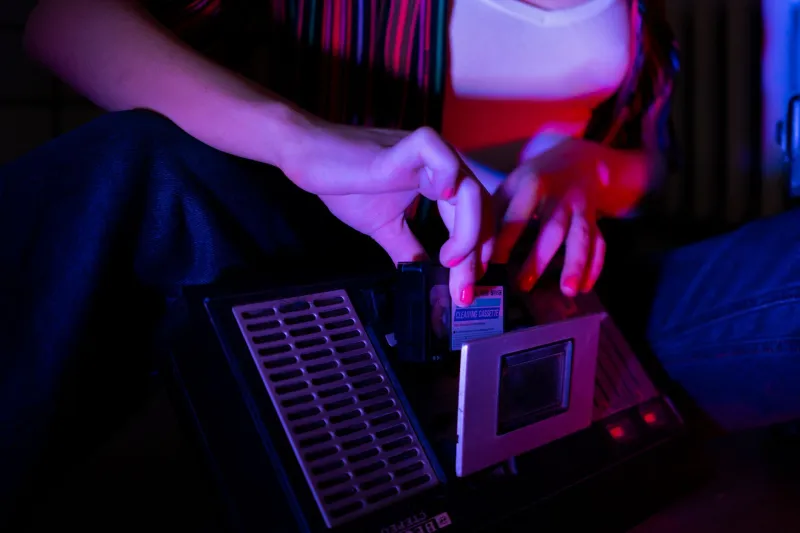
You Know This Feeling. Japan Just Gave It a Name.
You're scrolling through a thrift store bin and your fingers land on a cassette tape. Maybe it's a band you haven't thought about in fifteen years. Maybe it's the exact shade of plastic that lived in your parents' car. Your chest does something complicated — warm and a little sad at the same time — and for a second, you're somewhere else entirely.
That feeling? In Japanese, it's called natsukashii (懐かしい). Pronounced nah-tsoo-kah-shee, it roughly translates to "nostalgic" or "dear to one's memory," but the English word doesn't quite do it justice. Natsukashii isn't just remembering the past. It's longing for it. It's the bittersweet recognition that something wonderful existed — and that you can never fully return to it. It's joy and grief holding hands.
And right now, whether Americans realize it or not, natsukashii is having a serious cultural moment.
Why the US Can't Quit the Past
Look around and the evidence is everywhere. Vinyl record sales have outpaced CDs for three consecutive years. Polaroid cameras are back in the hands of teenagers who were born after digital photography became standard. Cottagecore — that dreamy aesthetic of hand-stitched linens, wildflower arrangements, and wood-fired everything — dominates Pinterest boards and TikTok feeds. Film photography is cool again. Rotary phones are decorative objects. Farmers' markets feel radical.
The easy explanation is that people are reacting to technology overload, retreating from screens and algorithms into something tactile and slow. And sure, that's part of it. But natsukashii offers a deeper read.
When we reach for a record player or a vintage denim jacket or a cast-iron skillet, we're not just rejecting the present. We're searching for meaning through memory — even memories we didn't personally live. (Yes, plenty of twenty-somethings are nostalgic for the 1970s. Natsukashii doesn't require you to have been there. It just requires that something feels like it carries the weight of a meaningful past.)
The Difference Between Nostalgia and Natsukashii
In Western psychology, nostalgia has historically gotten a bad rap. For centuries it was classified as a medical disorder — a pathological longing for home that was thought to make soldiers physically ill. Even today, we sometimes treat nostalgia as avoidance, a sign that someone can't cope with the present or is romanticizing something that was never as good as they remember.
Japanese culture takes a gentler view. Natsukashii isn't considered a problem to be solved. It's a natural, even beautiful, part of being human. When a Japanese person says something is natsukashii, there's no embarrassment in it. It's an acknowledgment: this thing once mattered, and part of me still carries it.
Research actually backs this up. Studies from the University of Southampton found that nostalgia functions as a psychological resource — something people draw on to feel connected, purposeful, and emotionally warm. Far from being a sign of weakness or escapism, healthy nostalgia can make us more present, not less, by reminding us what we value.
Natsukashii leans into that. It doesn't ask you to live in the past. It asks you to honor it.
Cottagecore, Analog, and the Natsukashii Aesthetic
Once you understand natsukashii, a lot of current American lifestyle trends start to make more sense.
Cottagecore isn't really about wanting to be a Victorian farm girl. It's about the sensory richness of a slower life — bread rising on a counter, rain on a tin roof, the smell of dried herbs. These are textures the modern world has largely smoothed away, and natsukashii is the ache you feel in their absence.
Analog technology — film cameras, record players, typewriters — carries a built-in imperfection that digital tools don't. A scratch on a record. The grain in a photograph. The way a typewriter key sticks slightly. These imperfections are evidence of time, and natsukashii finds them irresistible. They prove that something real happened.
Vintage fashion and flea market culture tap into the same vein. Wearing a coat from the 1960s isn't just a style choice — it's borrowing the emotional weight of a life that was fully lived. There's something natsukashii in that.
Even the resurgence of cooking from scratch — sourdough starters, homemade pasta, Sunday sauce — carries natsukashii energy. We're recreating the kitchens of grandparents we may barely remember, reaching toward a version of domestic life that felt more rooted.
How to Actually Practice Natsukashii (Without Getting Stuck)
Here's where it gets useful. Natsukashii isn't just a word for diagnosing your thrift store habits — it's a practice, a way of relating to your own history with more softness and intention.
Let yourself feel it fully. Next time something sparks that warm-sad feeling — an old song, a childhood smell, a photograph — don't brush past it. Sit with it for a moment. What does it remind you of? What did that era mean to you? Natsukashii is an invitation to check in with your own story.
Use it as a compass, not an escape hatch. If you keep feeling pulled toward a particular era or aesthetic, ask yourself what it represents. Simplicity? Community? Creativity? Slowness? That longing is data. It's telling you something about what you might want more of right now.
Bring the past forward intentionally. You don't have to choose between the present and the things you love from before. Play records while you cook dinner. Write letters. Keep a physical photo album. These aren't anachronisms — they're anchors.
Share the feeling. In Japan, natsukashii is often expressed out loud, to other people. "Natsukashii na" — something like "oh, that takes me back" — is a social phrase, a moment of connection. Try naming the feeling when it hits you. You'll probably find the person next to you knows exactly what you mean.
The Longing Is the Point
Here's the quietly radical thing about natsukashii: it doesn't promise you can get back to what you lost. It doesn't try to. The ache is part of the experience, not a bug to be fixed.
In a culture that tends to treat discomfort as something to optimize away, that's actually a pretty countercultural idea. Some feelings aren't problems. Some longing is just love with nowhere left to go — and that's worth something.
The Japanese concept of natsukashii reminds us that the past doesn't disappear when it ends. It lives in the things we keep, the aesthetics we're drawn to, and the quiet moments when a song or a smell sends us somewhere we can't quite return to.
Maybe that's why Americans keep reaching for vinyl and vintage and the handmade. Not because the past was better. But because something in us knows that meaning leaves a mark — and we're not ready to stop feeling it.
Natsukashii na.

