Komorebi: The Japanese Word for the Feeling That Reminds You Nothing Has to Be Perfect
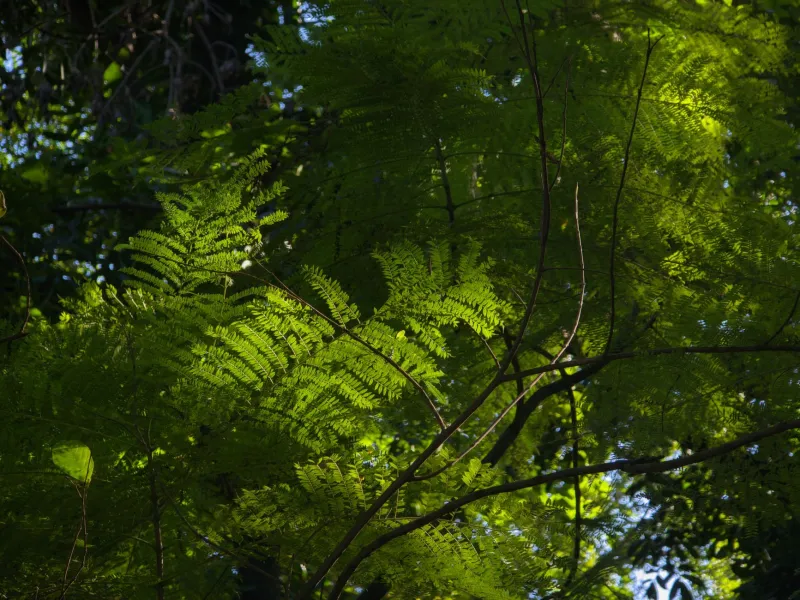
There's a particular quality of light that happens in the late afternoon when the sun drops just low enough to come through the trees sideways. The leaves break it up into something scattered and warm — patches of gold moving across the ground, across your arm, across whatever you happen to be looking at. It lasts maybe thirty seconds before the wind shifts or a cloud moves or you just keep walking.
In Japanese, there's a word for exactly that: komorebi (木漏れ日). Literally, it translates to something like "sunlight leaking through trees." But the word carries more than a description. It carries a whole posture toward the world — one that says: this small, fleeting, unrepeatable thing is enough. You don't need anything else right now.
And that, in a culture drowning in optimization culture and highlight reels, might be the most radical idea of all.
The Optimization Trap
American life has gotten very good at telling us what a peak experience looks like. It usually involves a specific destination, a specific achievement, a specific number in a bank account or on a scale. We plan for the big moments — the vacation, the promotion, the wedding, the house — and we treat everything in between as time we're just getting through.
This is exhausting in a way that's hard to articulate because it doesn't feel like a problem. It feels like ambition. It feels like forward motion. But the quiet cost is that ordinary days — which is to say, most of your life — start to feel like filler.
Social media made this worse. When you can curate what your life looks like to others, you start curating what counts as a good moment even to yourself. A walk in the neighborhood doesn't feel like much. A sunset that nobody photographed barely registers. The bar for "worth noticing" keeps climbing.
Komorebi is a direct challenge to that.
What a Single Word Can Do
There's something quietly powerful about the fact that Japanese has a specific word for dappled forest light. It means the culture decided this experience was worth naming. Worth preserving. Worth passing down.
Language shapes perception. When you have a word for something, you're more likely to notice it, more likely to pause for it, more likely to treat it as real. English has words for dramatic weather events and landmark emotions, but we don't have a word for the exact quality of light coming through leaves on a Tuesday afternoon. So we walk past it.
Japanese culture has long maintained a sensitivity to this kind of small, transient beauty — what you might connect to the broader philosophy of mono no aware, the gentle awareness that things pass. Komorebi fits into that tradition. It's not a dramatic realization. It's a quiet one. A noticing.
And noticing, it turns out, is a skill. One that most of us have let atrophy.
The Science of Small Moments
Positive psychology researchers have been studying something called "savoring" — the practice of consciously attending to and appreciating positive experiences as they happen. The findings are pretty consistent: people who savor small, everyday moments report higher overall life satisfaction than people who don't, regardless of how many big peak experiences they have.
In other words, the person who stops to register the feeling of morning coffee in their hands, the sound of rain on a window, the warmth of afternoon light through a curtain — that person tends to feel better about their life than someone who checked off a bucket list but never slowed down enough to actually feel any of it.
Komorebi is a savoring practice in disguise. It's an invitation to stop, for thirty seconds, and let a small beautiful thing be enough.
How to Practice It (Without Making It Another Task)
The tricky thing about writing "here's how to notice small moments" is that it can immediately become another item on the self-improvement list, which completely defeats the purpose. So let's keep this light.
You're not building a routine. You're just leaving a door open.
Let your eyes be bored sometimes. Most of us reach for our phones the second there's a pause. But boredom is when the world gets a chance to offer you something. A pattern on the ceiling. The way steam rises from a cup. The particular green of a tree after rain.
Don't photograph it first. This is hard, but worth trying. When you reach for the camera before you've actually felt the thing, you convert the experience into content before you've had a chance to live it. Try just looking. For one full minute. Then decide if you want a photo.
Name it, even quietly. Not to post. Not to share. Just to yourself. "That's beautiful." Or even just: "I see that." The act of acknowledging a moment makes it more real, more yours.
Go find it on purpose sometimes. Take a walk specifically to walk under trees when the light is doing something interesting. Sit by a window in the late afternoon. These aren't grand gestures. They're small appointments with the world.
The Bigger Invitation
The reason komorebi resonates so deeply when people encounter it — and it does, reliably, every time — is that it names a feeling most of us have had but never gave much weight to. We've all stood somewhere and been stopped by a quality of light or sound or air that felt, for just a moment, like exactly enough.
We just didn't know we were allowed to count it.
Japanese culture, in its long tradition of honoring impermanence and transient beauty, says: yes, count it. That moment of dappled light through the trees? That's not nothing. That's not a distraction from your real life. That might be your real life, showing up for you in the only way it knows how — small, unrepeatable, and right there.
You don't need a perfect life to feel complete. Sometimes all you need is thirty seconds of sunlight through leaves, and the willingness to let it land.