Eat What the Season Brings: How Japan's Ancient Food Wisdom Is Quietly Reshaping the American Table
Somewhere between the grocery store's year-round strawberries and the avocado toast that shows up in January, we lost the thread. Food became a logistics problem — how to get what we want, whenever we want it, at the lowest possible friction. And honestly? It kind of worked. Until it didn't.
More Americans are starting to feel something off about eating the same meals in February that they eat in August. The tomatoes taste like nothing. The peaches are mealy. And yet we keep buying them, because they're there, and because the alternative — actually waiting — feels almost radical.
Japan has a different relationship with this. It always has.
What Shun Actually Means
The Japanese concept of shun (旬) refers to the peak season of a particular food — the brief window when an ingredient is at its most flavorful, most nutritious, and most aligned with the natural rhythms of the year. Eating shun isn't a diet philosophy or a wellness trend. It's just considered the obvious, sensible way to eat.
A Japanese home cook in late autumn isn't hunting down summer corn. She's reaching for matsutake mushrooms, kabocha squash, and sweet persimmons — because that's what the season is handing her, and she trusts that the season knows what it's doing.
This trust is the part that's hardest to translate. In the US, we tend to think of food choice as a personal freedom thing. You should be able to eat whatever you want, whenever you want it. But the Japanese framing flips that a little: eating seasonally isn't a restriction. It's a conversation between you and the world around you.
Your Body Is Already Ahead of You
Here's something worth sitting with: cravings are often seasonal, even when our pantries aren't.
In the dead of winter, most people want warm, hearty, dense foods — soups, stews, roasted roots. In summer, the appetite naturally drifts toward lighter things — cold noodles, fresh fruit, cucumber everything. Traditional Japanese cuisine codified this intuition thousands of years ago. Winter calls for nabe hot pots and warming daikon. Spring brings bamboo shoots and fresh greens. Summer is for cold soba, chilled tofu, and icy kakigori. Fall arrives with chestnuts, sweet potato, and earthy mushrooms.
The body isn't confused by the calendar. It's responding to temperature, daylight, and energy demands. Seasonal eating just means getting out of the way and letting that intelligence work.
Research has started to catch up with this, too. Studies suggest that produce eaten in season contains higher levels of vitamins and antioxidants than the same produce shipped across hemispheres out of season. A January tomato grown in a hothouse in another country isn't the same food as an August tomato from a farm two counties over. The nutrition profile is different. The flavor is different. Even the environmental cost is different.
The Joy Part (Which Doesn't Get Enough Credit)
There's a happiness angle here that tends to get buried under the health talk, and it deserves its own moment.
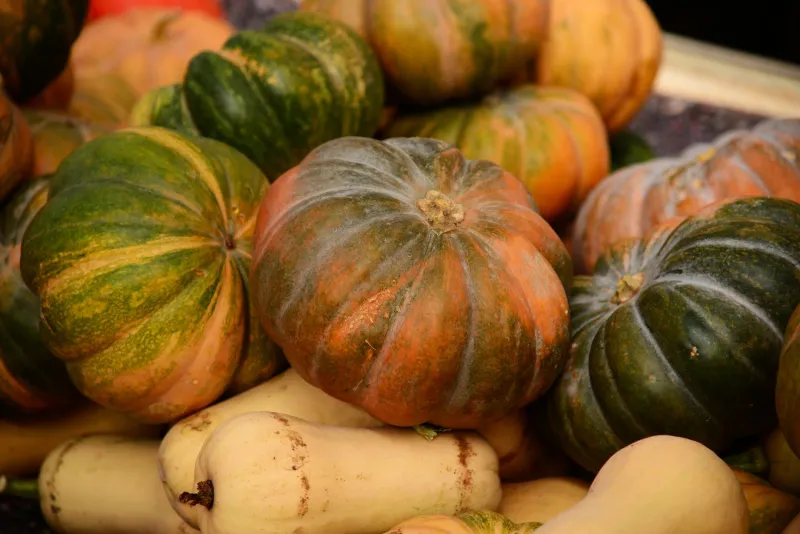
When you eat seasonally, food becomes something you actually look forward to again. The first strawberries of late spring hit differently when you haven't had them since last June. The arrival of pumpkin — real roasted pumpkin, not the latte version — becomes a small event. Japanese culture celebrates this openly. Restaurants update their menus to announce seasonal specials with genuine fanfare. There's a cultural ritual around the first bonito of spring, the first new rice of autumn. These aren't marketing gimmicks. They're acknowledgments that time is passing and that each season brings something worth celebrating.
Americans are slowly rediscovering this feeling through CSA boxes, farmers markets, and the growing "eat local" movement. But the Japanese framework adds something those movements sometimes miss: it's not just about local or organic or sustainable (though it can be all of those things). It's about relationship — between you, your food, and the season you're actually living in.
How to Actually Start
You don't have to overhaul your kitchen or memorize a seasonal produce chart. A few small shifts can get you surprisingly far.
Pay attention to what looks best, not just what you always buy. At the grocery store or farmers market, notice what's abundant and vibrant. That's usually what's in season. If it looks sad, it probably traveled too far or too long.
Pick one seasonal ingredient a week and build around it. Japanese home cooking often works this way — a single peak ingredient becomes the star, and everything else supports it. Try it with whatever's thriving at your local market.
Let go of the year-round pantry mentality for fresh produce. Keep your staples, sure. But for vegetables and fruit, let the season decide. You might be surprised how creative constraints actually make cooking more fun.
Notice how you feel in each season and eat toward that. Tired and cold in February? That might be your body asking for more warming, mineral-rich foods. Sluggish in July heat? Light, hydrating foods might be exactly what you need.
The Bigger Picture
Japan's relationship with seasonal eating is deeply tied to something the culture holds broadly: a respect for impermanence. Things come and go. Cherry blossoms bloom for two weeks. Matsutake mushrooms appear for a month. The first harvest of new rice is precious partly because it won't last.
Americans have spent decades building systems to defeat impermanence — to make everything available always. And there's plenty of good that's come from that. But somewhere in the process, we also flattened the texture of the year. Every month tastes like every other month.
Eating seasonally — even a little, even imperfectly — is a way to bring that texture back. To let January taste like January and August taste like August. To let your pantry take its cues from the world outside your window.
Your body already knows this. The season has been trying to tell you. Maybe it's time to listen.