Broken and Better: What Kintsugi Teaches Us About Turning Our Worst Moments Into Gold
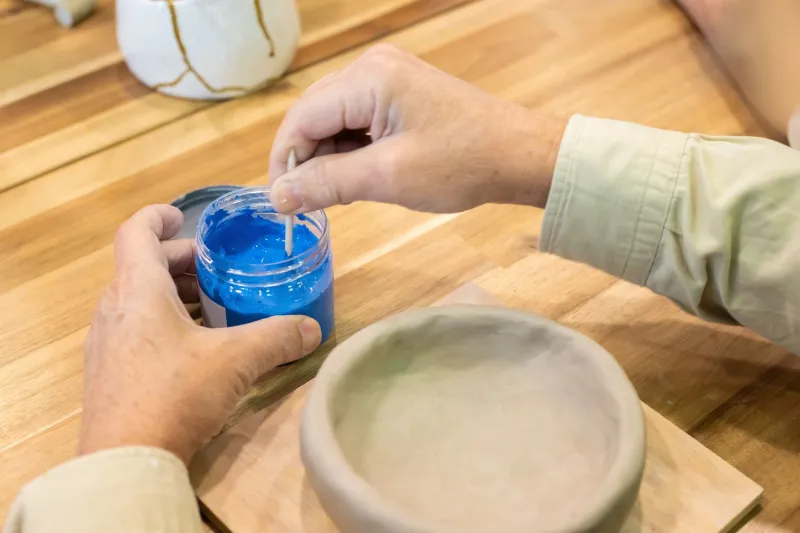
There's a bowl in the Tokyo National Museum that most visitors walk right past. It's cracked. Visibly, dramatically cracked — veins of gold running across its surface like a tiny river system. And yet, people who do stop to look at it tend to linger longer than they do in front of the perfect, unbroken pieces nearby.
That bowl is a kintsugi piece, and once you understand what it represents, you might start seeing your own life a little differently.
So What Exactly Is Kintsugi?
Kintsugi (金継ぎ) literally translates to "golden joinery" or "golden repair." It's a Japanese craft technique — believed to have originated in the 15th century — where broken ceramics are mended using lacquer mixed with powdered gold, silver, or platinum. The result isn't a hidden fix. It's the opposite. The repair is the point. The fracture lines are highlighted, made beautiful, turned into the most visually striking part of the whole object.
The philosophy behind it draws from wabi-sabi, the Japanese aesthetic that finds beauty in impermanence and imperfection. Rather than disguising damage, kintsugi celebrates it. The object's history — including its breakage — becomes part of its identity, not a flaw to be ashamed of.
And here's where things get interesting for the rest of us.
The American Reflex to Hide the Cracks
In the US, we have a complicated relationship with failure. On one hand, we love a comeback story — think every underdog sports movie ever made, or the way startup culture glorifies founders who "failed fast" before striking gold. On the other hand, in real life, most people work pretty hard to hide their setbacks. We edit LinkedIn timelines. We don't bring up the business that didn't make it. We filter photos. We perform confidence even when we're running on empty.
The cultural message is pretty consistent: show your wins, minimize your losses. Polish the surface.
Kintsugi asks the exact opposite question: What if the crack is the most interesting thing about you?
Resilience Isn't About Bouncing Back — It's About Carrying Forward
We tend to talk about resilience as a kind of reset button. Bounce back. Get back to normal. Return to who you were before the hard thing happened. But that framing quietly implies that the hard thing was an interruption — something outside of your real story.
Kintsugi reframes this entirely. The breakage isn't an interruption. It's an event that happened to the object, and now the object is different because of it. More layered. More textured. More itself, in a way.
Psychologists have a term that rhymes with this idea: post-traumatic growth. Research by psychologists Richard Tedeschi and Lawrence Calhoun found that many people who go through significant adversity don't just recover — they report meaningful positive changes in their relationships, their sense of personal strength, and their appreciation for life. They don't go back to who they were. They become someone new, someone shaped by what broke them.
That's not toxic positivity. It's not "everything happens for a reason." It's something more honest: This happened. It changed me. And the changed version of me has value.
What It Looks Like in Practice
You don't need a pottery kiln or lacquer supplies to apply this philosophy (though honestly, kintsugi kits are available online and make for a genuinely meditative weekend project). The real work is mental.
Here are a few ways to bring the kintsugi mindset into your everyday life:
Stop treating your setbacks as edits. When you're telling your own story — to a new friend, in a job interview, on a date — notice when you skip over the hard parts. Sometimes that's fine. But sometimes the hard part is exactly what makes you relatable and real. The version of you that struggled is not the embarrassing rough draft. It's part of the finished piece.
Let your failures inform rather than define. Kintsugi doesn't make the bowl about the crack. The gold repair is visible, but the bowl is still a bowl. It still holds tea. Your worst year doesn't have to become your whole identity — but pretending it didn't happen doesn't serve you either. Let it sit in your story with some dignity.
Appreciate the people in your life who show their gold lines. There's something deeply trustworthy about a person who's willing to talk honestly about a time they got it wrong, got hurt, or fell apart. Kintsugi reminds us that visible repair is a sign of survival, not weakness.
A Different Kind of Beautiful
Perfection is a weird thing to chase, when you think about it. A perfectly smooth, unbroken ceramic piece is lovely. But there's nothing to learn from it. No story to read. No evidence that it's been anywhere or survived anything.
The kintsugi bowl has been somewhere. Something happened to it. And instead of ending up in the trash, it ended up on display — not despite what happened to it, but because of how it was put back together.
If you're carrying some cracks right now, that's not a reason to hide. It might just be the beginning of something worth showing.
Tanoshiku Kuraso — Live Joyfully, the Japanese Way.