Why the Smartest People in the Room Say 'I Don't Know' — And What Japan Taught Me About It
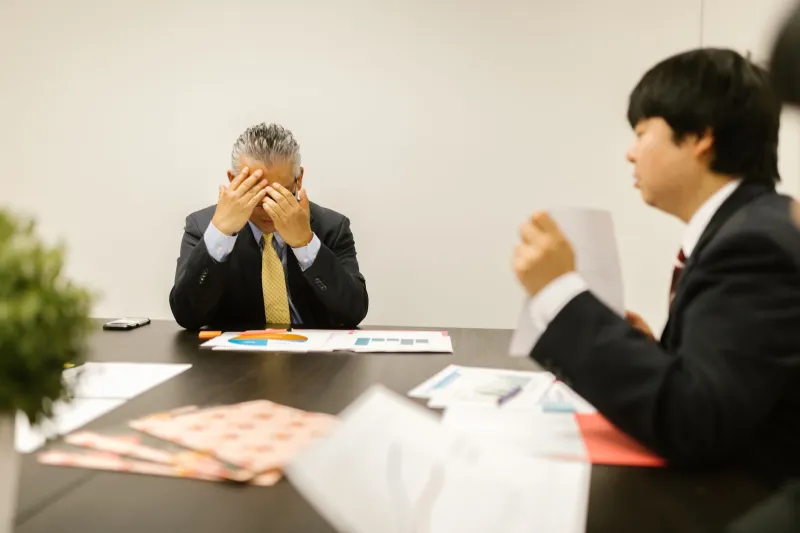
There's a moment most of us have lived through. You're in a meeting, someone lobs a question your way, and even though the honest answer is I have absolutely no idea, you open your mouth and start talking anyway. You riff. You pivot. You use enough confident-sounding language that nobody quite notices you're building a sandcastle.
Welcome to American professional culture, where faking it until you make it isn't just tolerated — it's practically a job requirement.
But spend any time studying Japanese workplace philosophy, or talking to people who've worked inside Japanese organizations, and you'll notice something quietly radical happening. Leaders say wakarimasen — "I don't know" — and nobody flinches. Teams admit uncertainty openly, treat it as a starting point rather than a weakness, and somehow, counterintuitively, come out the other side making better decisions.
So what's actually going on here? And more importantly, can we bring some of it back home?
The Cultural Backstory You Need First
To understand why Japanese professionals are so comfortable sitting with uncertainty, it helps to understand a few threads running through Japanese culture at large.
The first is wa — harmony. Japanese workplaces have long prioritized collective trust over individual performance theater. When one person bluffs their way through a knowledge gap, it disrupts the group's ability to make accurate decisions together. Honesty, even uncomfortable honesty, protects the team.
The second thread is something closer to intellectual humility as a long-term strategy. In many Japanese professional traditions, especially those influenced by Zen philosophy and craftsmanship culture, mastery is understood as a lifelong process. The idea that any one person could have all the answers at any given moment is almost philosophically absurd. Acknowledging the edges of your knowledge isn't a confession of failure — it's a sign you understand how deep the subject actually goes.
Cross-cultural business consultant Dana Hiroshi, who has spent over a decade helping American companies build partnerships with Japanese firms, puts it plainly: "In the U.S., we reward the person who sounds most certain. In many Japanese professional contexts, the person who admits what they don't know is often the one people trust most. It signals that when they do speak with confidence, they mean it."
Why American Professionals Are Exhausted — And Why That's Related
Here's something worth sitting with: a 2023 Gallup survey found that workplace stress among American employees remains at near-record highs, with "pressure to perform" consistently ranking among the top contributors. Part of that pressure is the unspoken expectation to project competence constantly, even in areas where you're genuinely still learning.
That's a lot of cognitive load to carry around. Maintaining a performance of certainty takes real mental energy — energy that could otherwise go toward, you know, actually solving problems.
There's also a trust cost. When leaders consistently oversell their confidence and then get things wrong (which, inevitably, they do), teams start to quietly discount what they say. The credibility erosion is slow, but it's real. People stop bringing their best questions to the table because they expect polished non-answers in return.
Contrast that with what happens when a manager says, honestly, "I don't have enough information to answer that right now — let me find out and get back to you." Research from Harvard Business School on psychological safety suggests that this kind of modeling — where leaders openly acknowledge their own knowledge gaps — directly encourages team members to speak up, ask questions, and flag problems earlier. The whole decision-making ecosystem gets healthier.
What This Actually Looks Like in Practice
Adopting this approach doesn't mean wandering into your next board meeting and announcing that you're confused about everything. It's more nuanced than that, and the Japanese workplace context offers some useful texture.
Separate "I don't know yet" from "I don't care to find out." In Japanese professional culture, admitting uncertainty comes paired with a clear commitment to follow up. The phrase shōchi shimashita — roughly, "I have received and understood" — signals that even if you don't have the answer in the moment, you're taking ownership of getting it. Uncertainty isn't a dead end; it's a handoff.
Let silence do some work. One thing Americans often notice in Japanese meetings is the comfort with pauses. When a hard question comes up, the instinct isn't to immediately fill the air. Taking a breath, actually considering what you know and don't know, and then responding — that's not awkwardness, it's respect for the question. Try it once and notice how differently it lands.
Reframe uncertainty as information. In Japanese manufacturing culture, particularly in the kaizen (continuous improvement) tradition, not knowing something is treated as a signal that there's a process gap worth examining. "We don't know why this is happening" isn't a problem to cover up — it's the beginning of a productive investigation. Bringing that framing into your own workplace means treating your team's honest uncertainty as useful data rather than embarrassing noise.
Model it from the top. This is maybe the most important piece. The research is consistent: when people in positions of authority openly acknowledge what they don't know, it gives everyone else permission to do the same. If you're a manager, a team lead, or honestly just someone who others look to in meetings, your willingness to say "I'm not sure — what do the rest of you think?" can shift the entire culture of a room.
The Deeper Invitation
There's something genuinely freeing about all of this, once you let it land.
The hustle culture narrative in America has quietly convinced a lot of us that our value is tied to what we know, what we've accomplished, and how convincingly we can perform expertise in real time. It's exhausting because it's impossible to sustain. Nobody knows everything. Pretending otherwise doesn't make you look smarter — it just makes you harder to trust.
Japanese leadership philosophy, at its best, offers a different deal: your credibility comes not from never having gaps, but from being honest about where they are and rigorous about filling them. That's a standard that's actually achievable. And it turns out, people find it incredibly refreshing.
Next time you're in a meeting and the honest answer is I don't know, try saying it. You might be surprised how much trust you build — and how much lighter you feel walking out the door.
Tanoshiku kuraso — live joyfully. And maybe a little more honestly, too.